
News
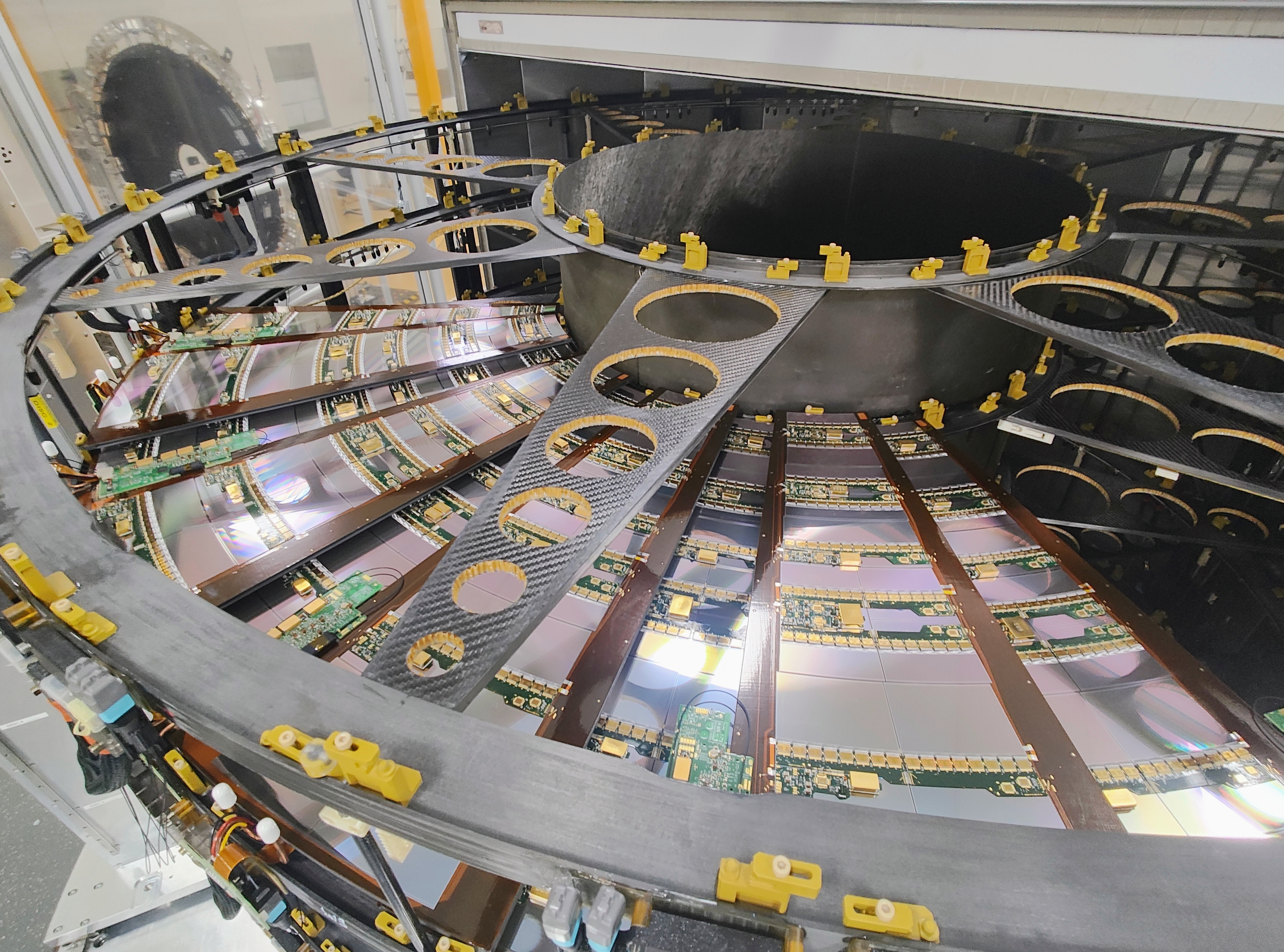
First petals installed in the ATLAS Inner Tracker Strips Endcap
A major milestone has been reached in the construction of the ATLAS Inner Tracker (ITk), with the installation of the first nine production ‘petals’ of the ITk Strips Endcap at DESY in Germany.
News |

77 Tonnes of ATLAS Shielding on the Move
CERN teams successfully complete the first major transport operation of LS3. A 77-tonne shielding component, known as the JFSU, moves from the surface hall above the ATLAS experiment to Building 191 on CERN’s main site.
News |
Summary of new ATLAS results from ICHEP 2026
Summary of new ATLAS results presented at the 2026 International Conference on High Energy Physics (ICHEP).
News |
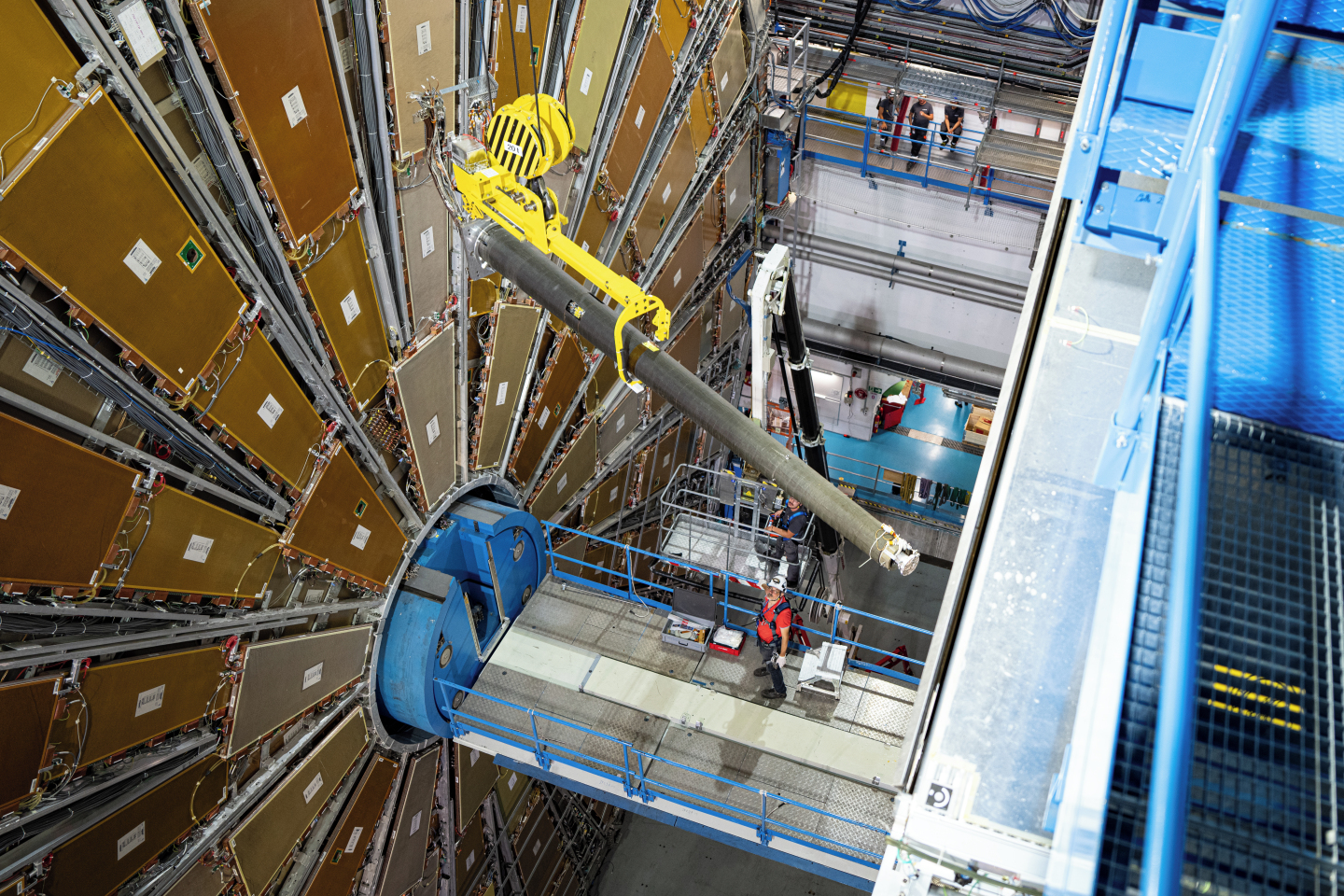
ATLAS beam vacuum assembly enters retirement
After more than a decade of service, one of the LHC’s key components for guiding particle beams through the ATLAS experiment has been removed, making way for the High-Luminosity LHC era.
News |
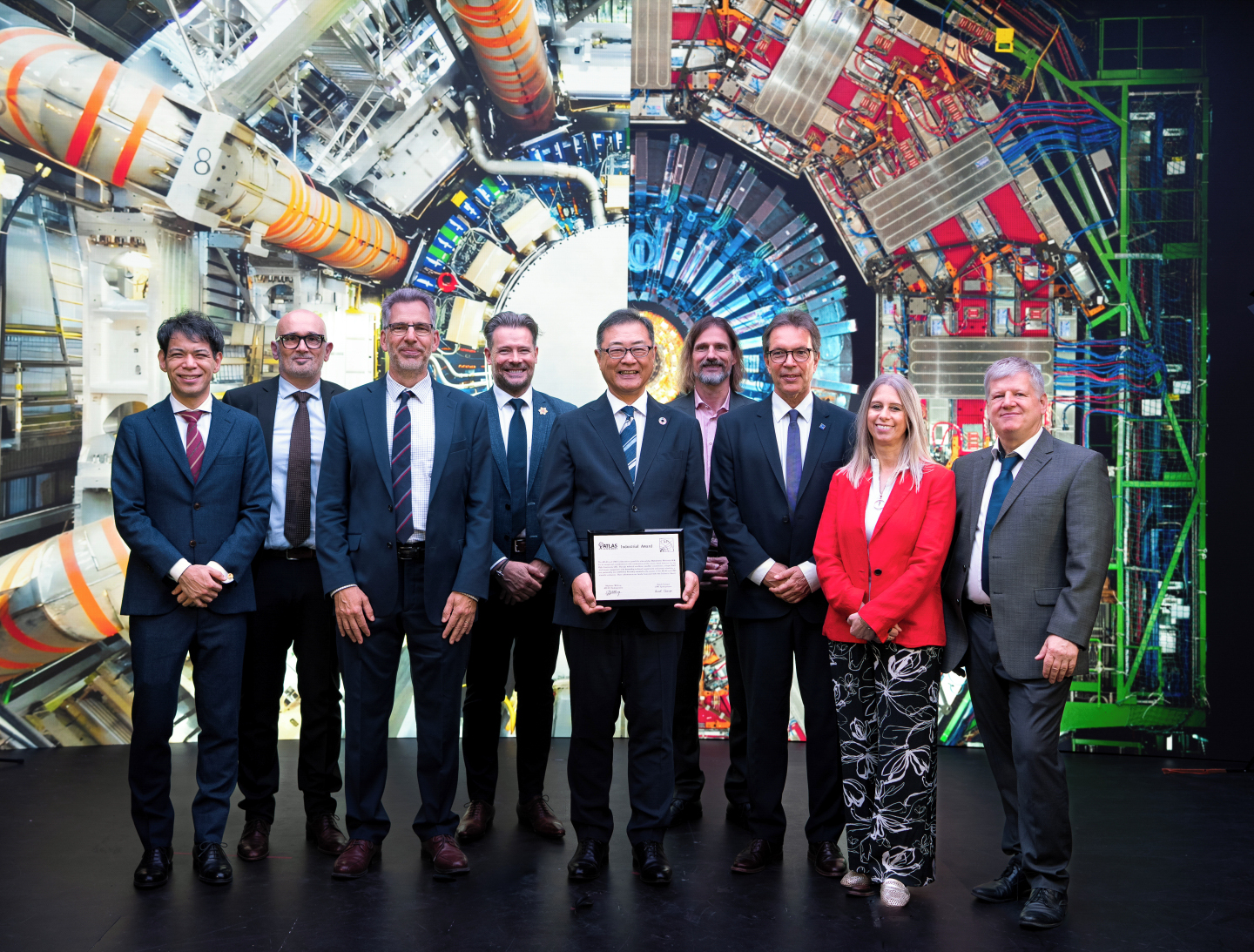
ATLAS and CMS recognise longstanding industrial partner Hamamatsu Photonics K.K.
Hamamatsu Photonics K.K. was announced as the 2026 Industrial Award winner by the ATLAS and CMS Collaborations at a dedicated ceremony on 15 July 2026.
News |
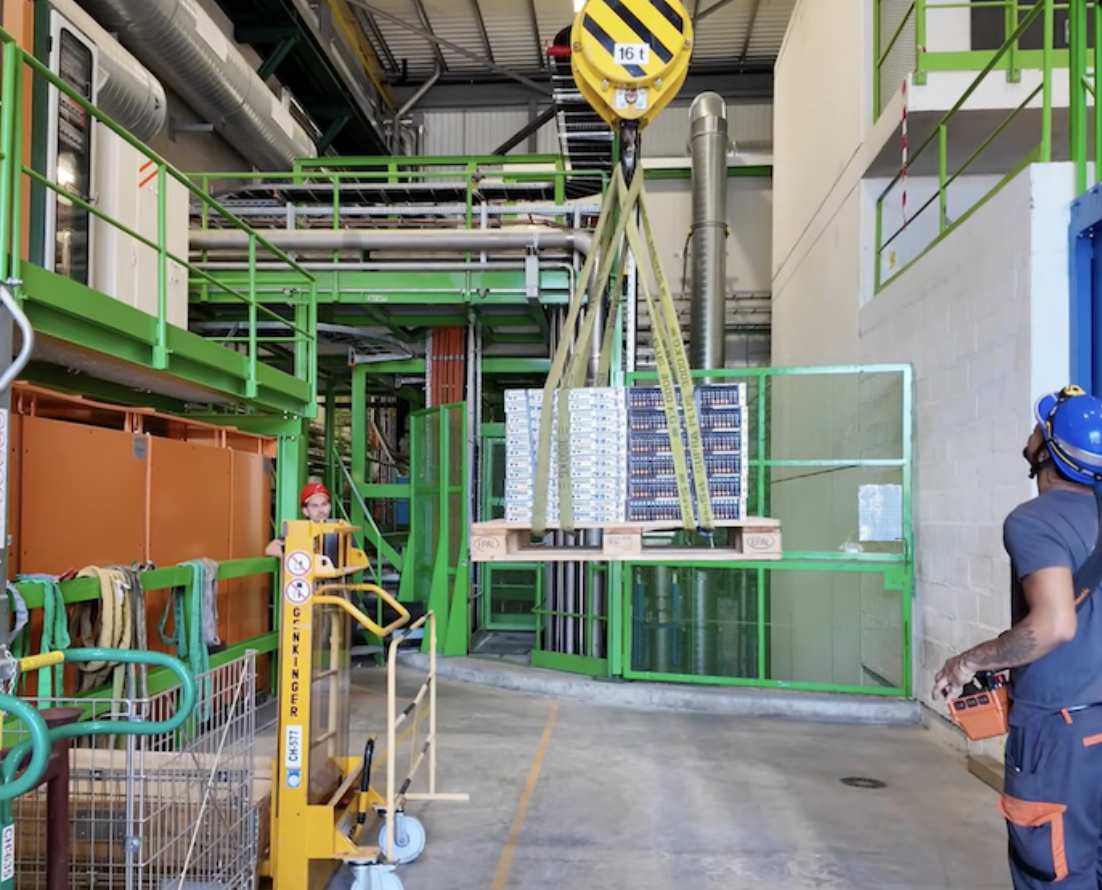
ATLAS High-Level Trigger farm on the move
A major relocation campaign has been launched to dismantle one of the ATLAS experiment’s key computing systems and transport it from LHC Point 1 to its new home at LHC Point 8, the site of the LHCb experiment.
News |
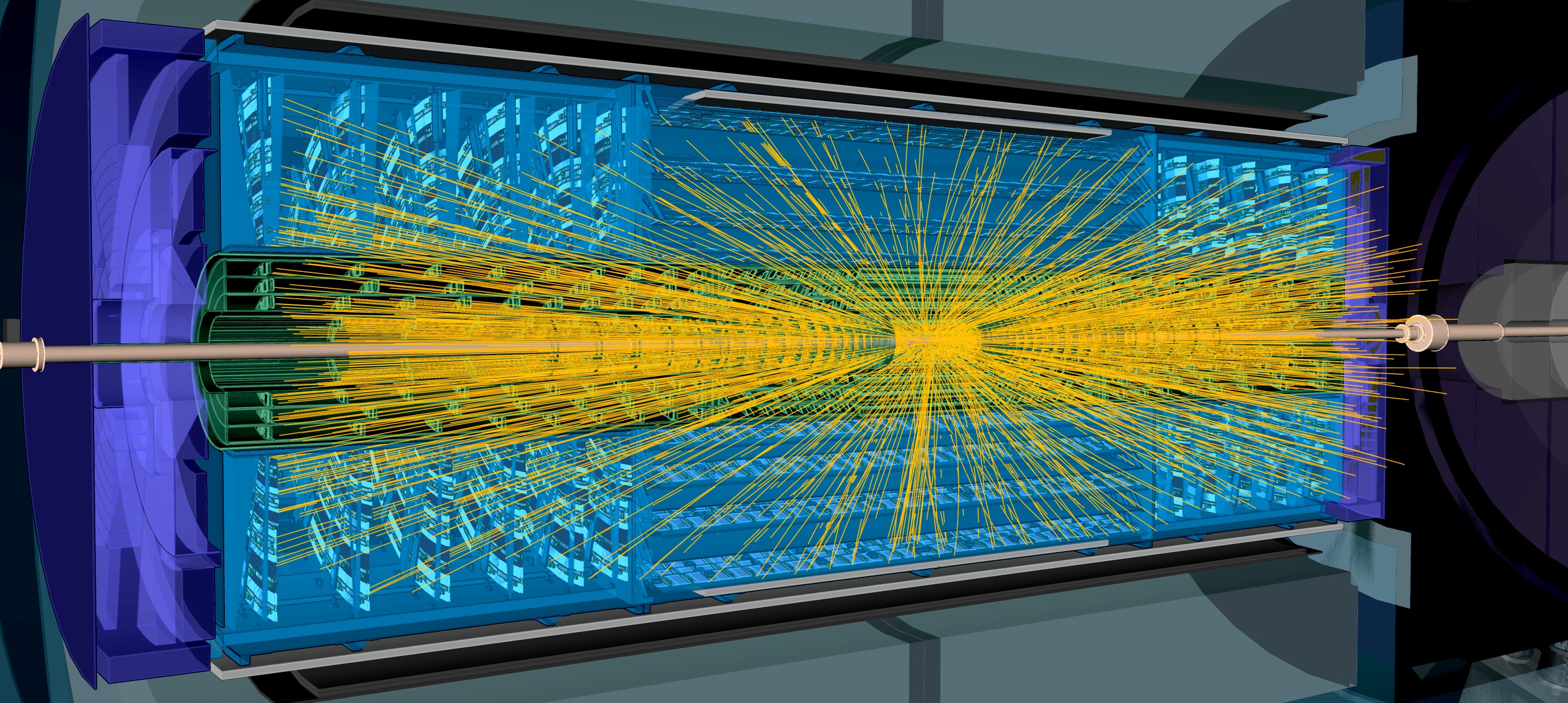
ATLAS enters the high-luminosity era
At 05:52 a.m. on 27 June 2026, the final protons of the Large Hadron Collider's third data-taking period circulated through the accelerator, bringing Run 3 to a close and marking the end of a remarkable chapter in particle physics. The next several years will be devoted to transforming both the LHC and the ATLAS experiment for the High-Luminosity LHC (HL-LHC), an ambitious upgrade programme that will culminate in the return of particle beams in 2030.
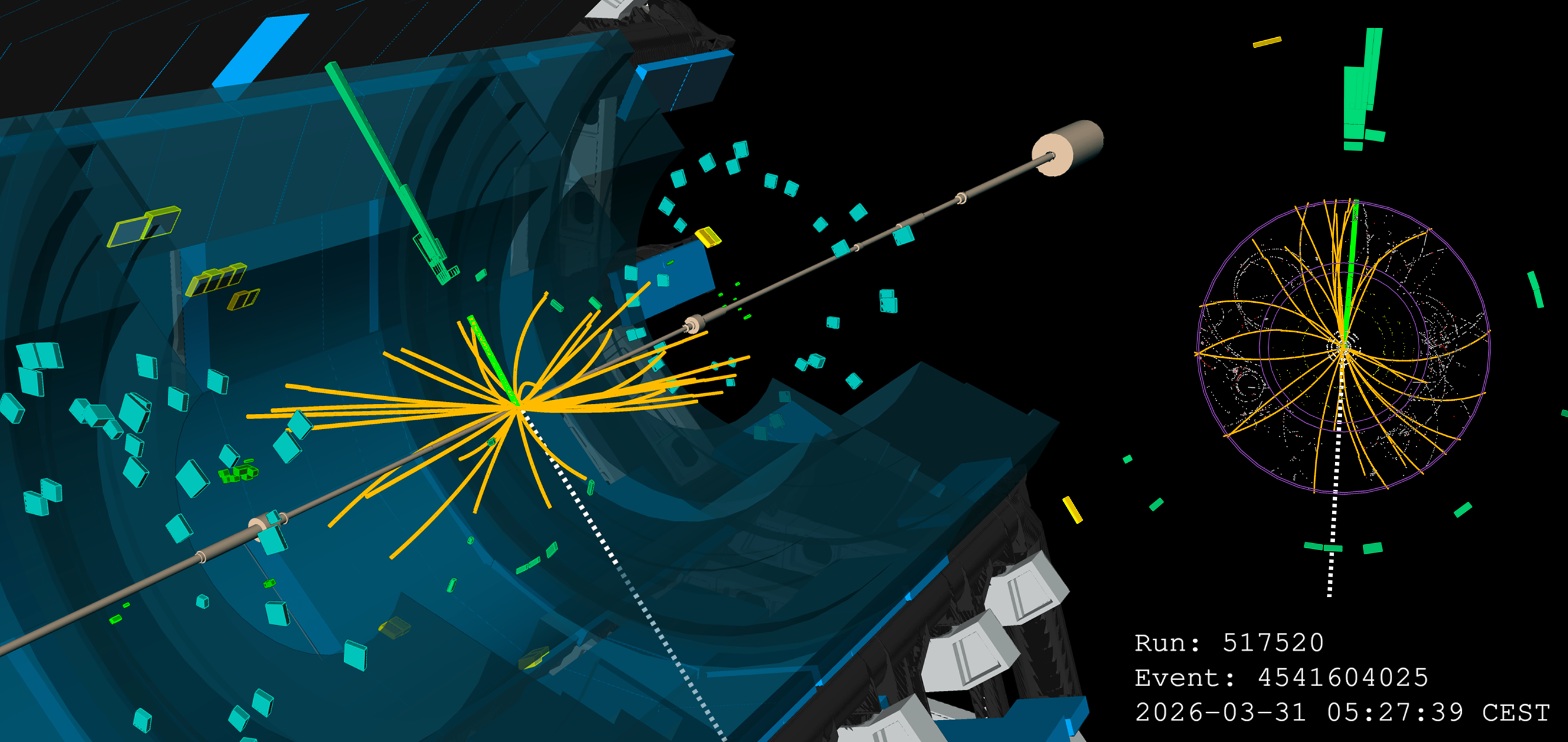
ATLAS records vital low-intensity data during special LHC run
For three weeks in April 2026, the Large Hadron Collider did something counterintuitive: it eased off the throttle. Instead of maximising collision rates, the accelerator entered a deliberately quieter operating mode. This shift offered the ATLAS Collaboration a rare opportunity to study fundamental particles in an exceptionally clean experimental environment.
News |

Summary of new ATLAS results from Moriond 2026
Summary of new ATLAS results presented at the Rencontres de Moriond conferences 2026.
News |
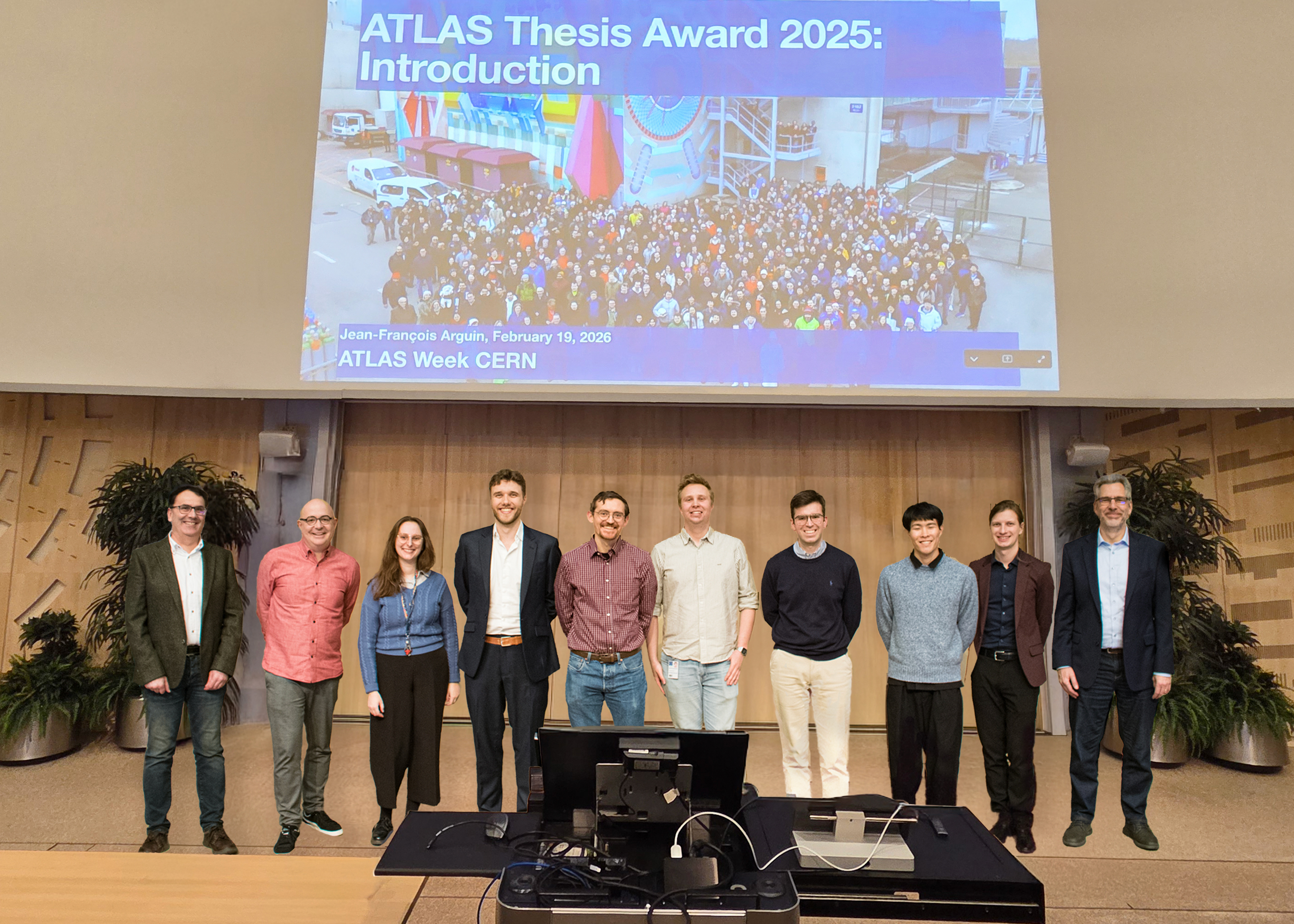
ATLAS 2025 Thesis Awards spotlight the “soul” of the Collaboration
On 19 February 2026, the ATLAS Collaboration gathered in CERN’s Main Auditorium for the 2025 Thesis Awards – an annual celebration of the vital role of PhD students within the experiment.
News |
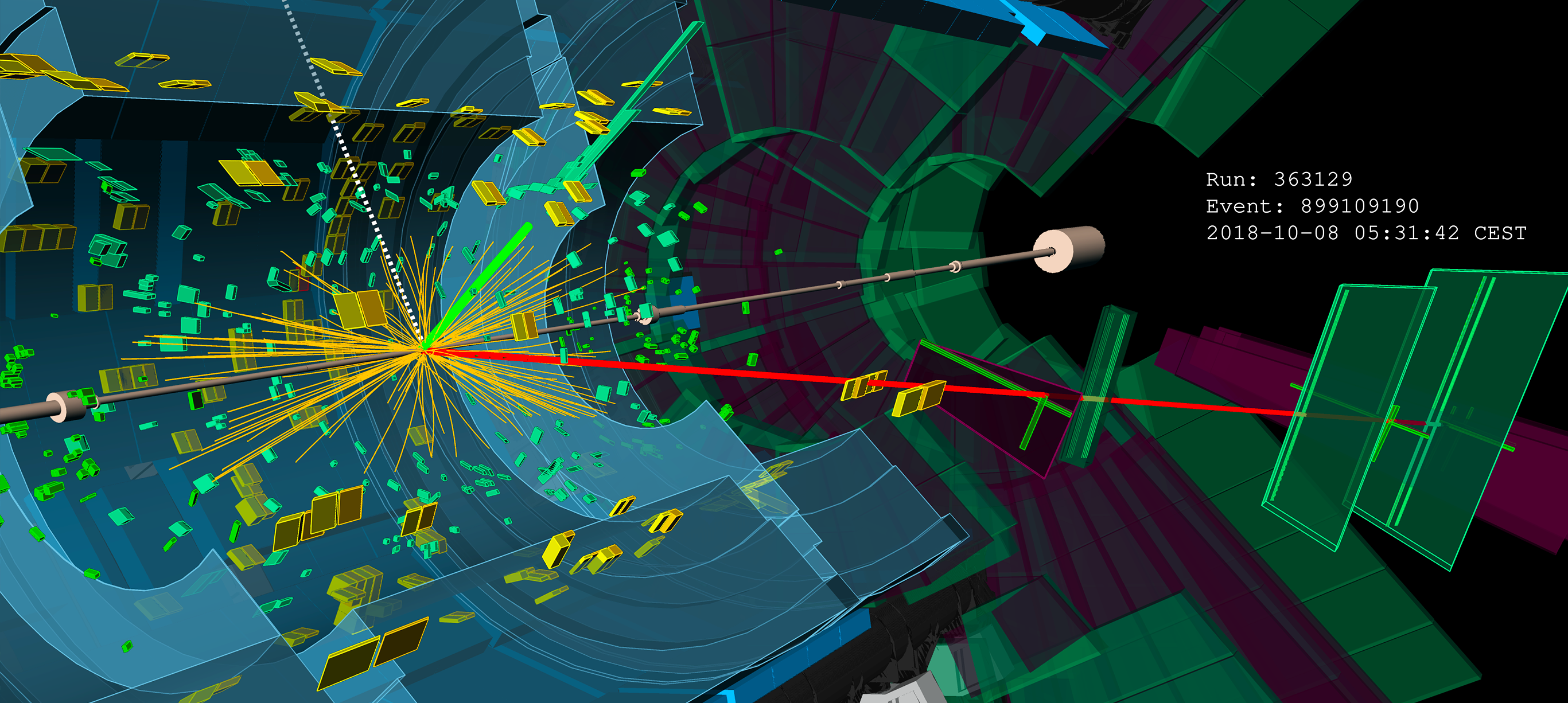
Searching for flavourful violations of the Standard Model
Lidia Dell'Asta, Jacob Julian Kempster and Daniele Zanzi describe how the ATLAS Collaboration is probing forbidden flavour-changing and lepton-flavour-violating processes as powerful tests of the Standard Model’s limits.
Feature |
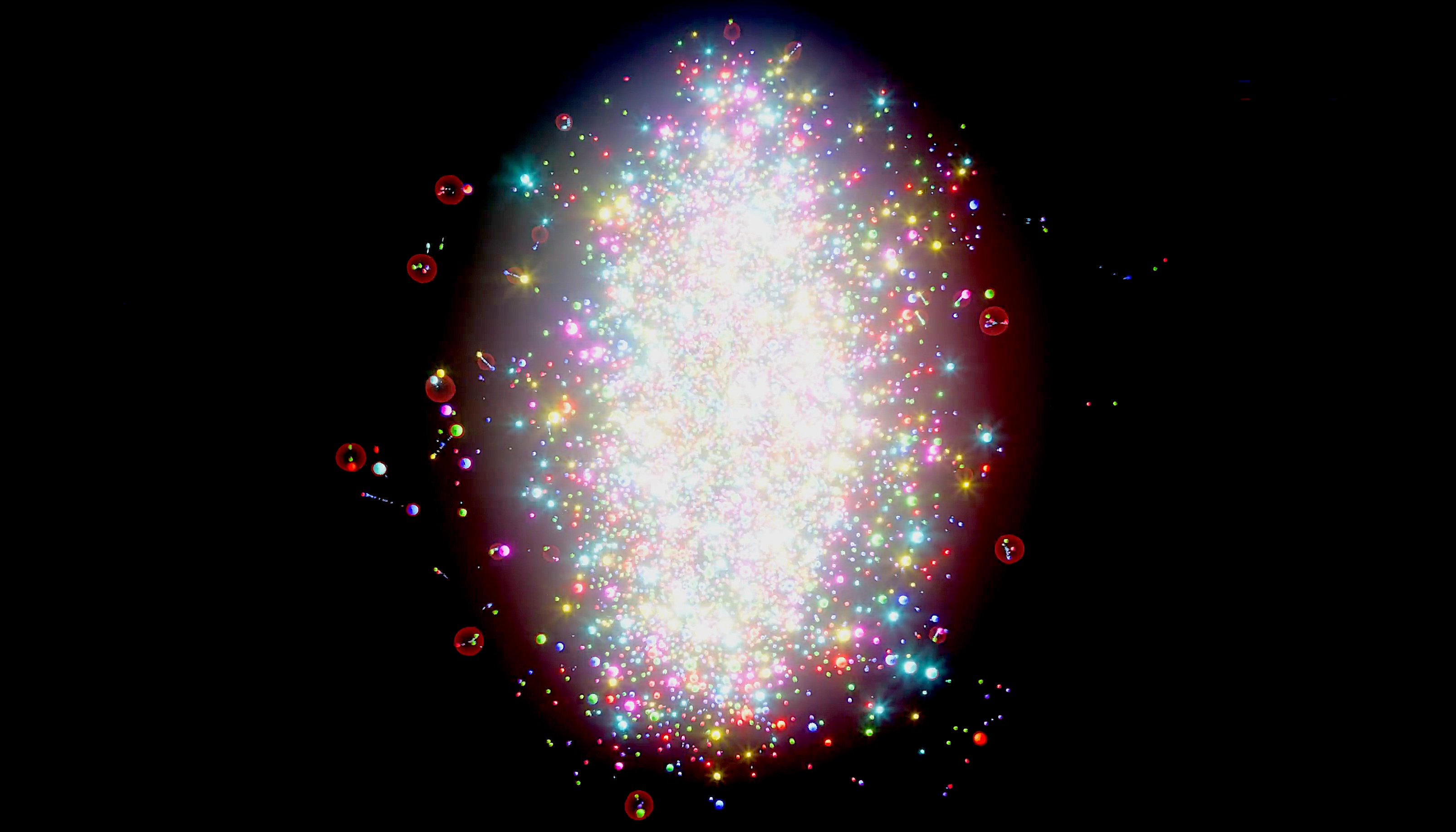
Shape-shifting collisions probe secrets of early Universe
The first high-energy collisions between light nuclei at the Large Hadron Collider confirm the unusual “bowling-pin” shape of neon nuclei and offer up a new tool to study the extreme state of matter produced in the aftermath of the Big Bang.

Elusive romance of top-quark pairs observed at the LHC
The CMS and ATLAS experiments at CERN’s Large Hadron Collider have observed an unforeseen feature in the behaviour of top quarks that suggests that these heaviest of all elementary particles form a fleeting union.
New ATLAS results from EPS-HEP
The ATLAS Collaboration is set to make waves at the EPS-HEP 2025 conference, unveiling a wide range of new results.
News |
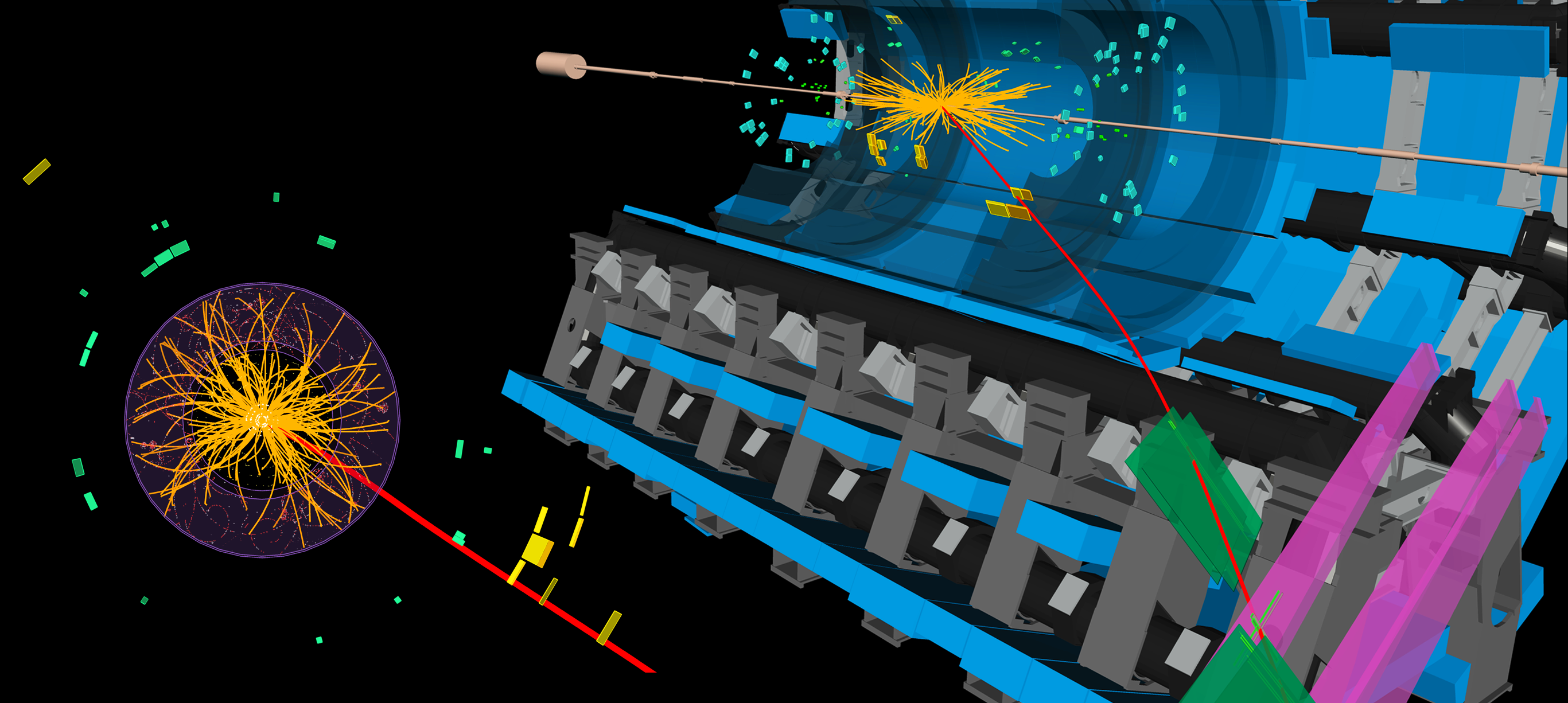
ATLAS takes a breath of oxygen
The ATLAS Experiment at CERN dives into uncharted waters, recording its first-ever collisions of oxygen and neon ions. These are not your typical heavy-ion collisions. Oxygen and neon nuclei are far smaller than lead – the LHC’s usual candidate for ion runs – and offer physicists exciting new opportunities to study the strong force.
News |
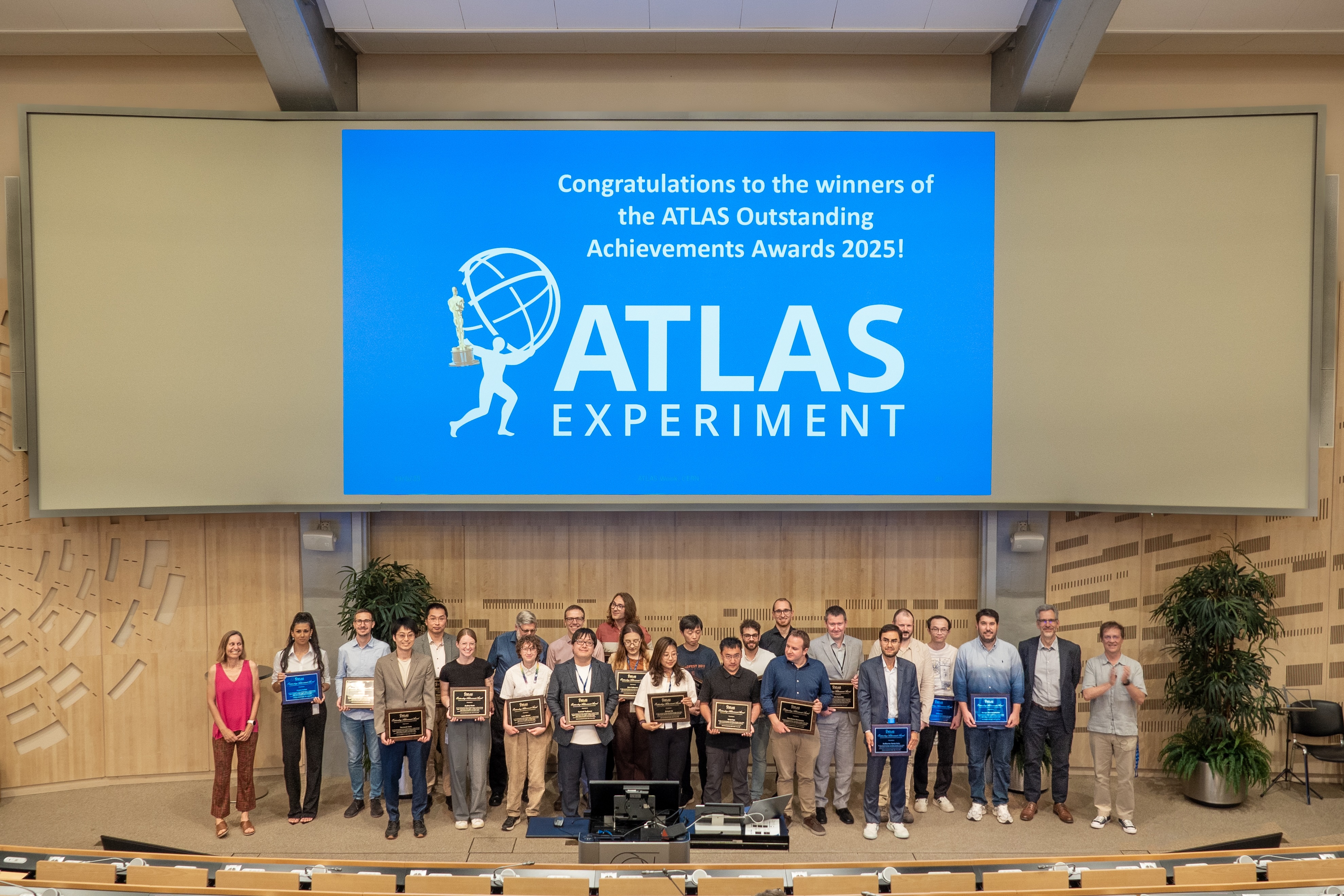
Celebrating the outstanding achievements of the ATLAS Collaboration
The ATLAS Collaboration celebrated the dedication, ingenuity and collaborative spirit of its members at the 8th Outstanding Achievement Awards.
News |
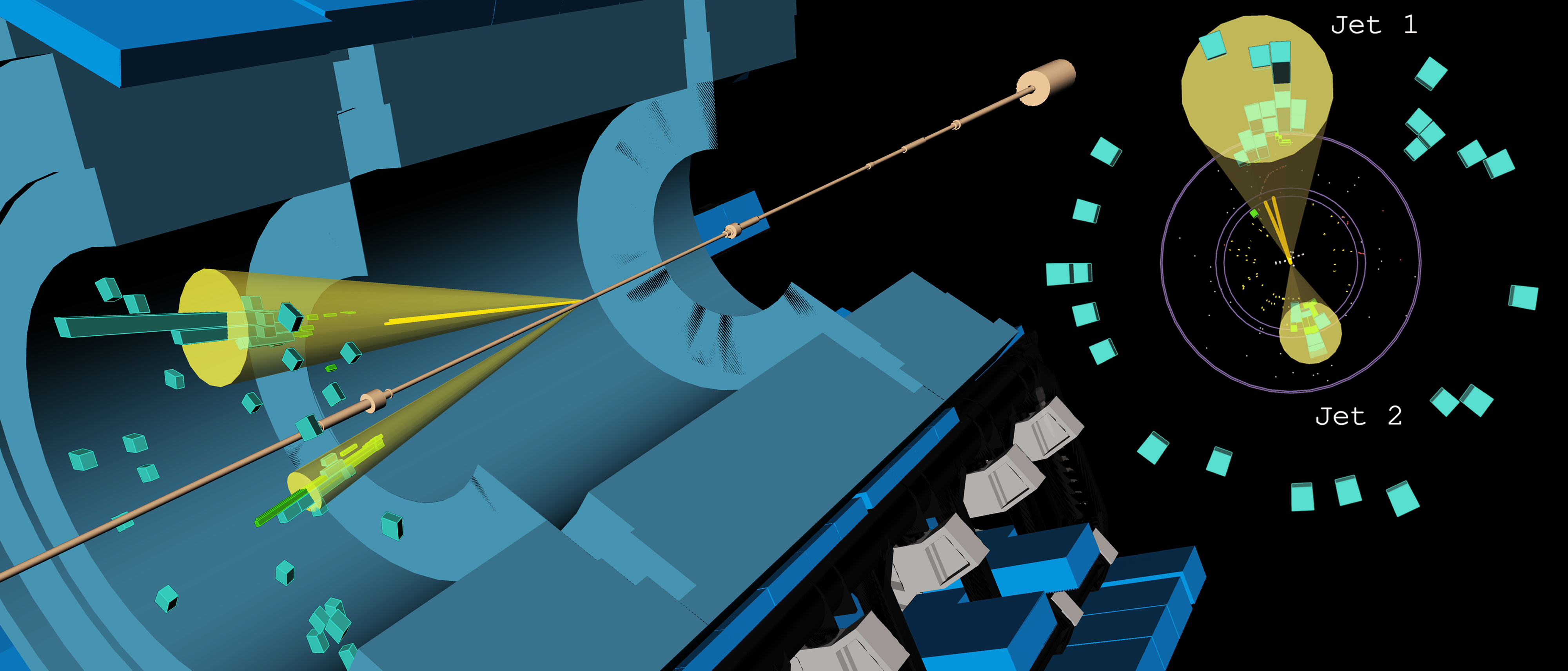
ATLAS Highlights from Quark Matter 2025
Last week, the ATLAS Collaboration presented new results at the Quark Matter 2025 conference, held in Frankfurt am Main (Germany). From detailed studies of the quark-gluon plasma’s collective motion to new measurements in ultra-peripheral collisions, ATLAS is providing new insight into the fascinating behaviour of heavy-ion collisions and the quark–gluon structure of nuclei.
News |
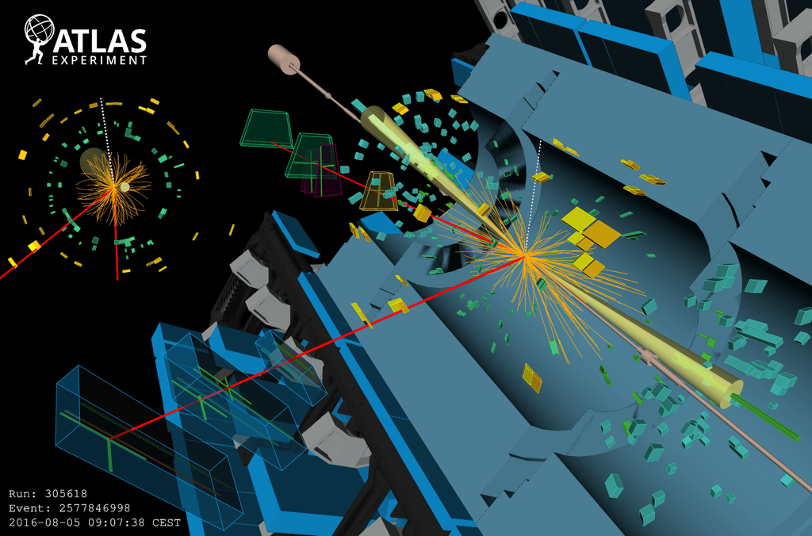
ATLAS gets under the hood of the Higgs mechanism
Last week, at the Rencontres de Moriond conference, the ATLAS Collaboration brought physicists a step closer to understanding the nature of the electroweak symmetry-breaking mechanism.
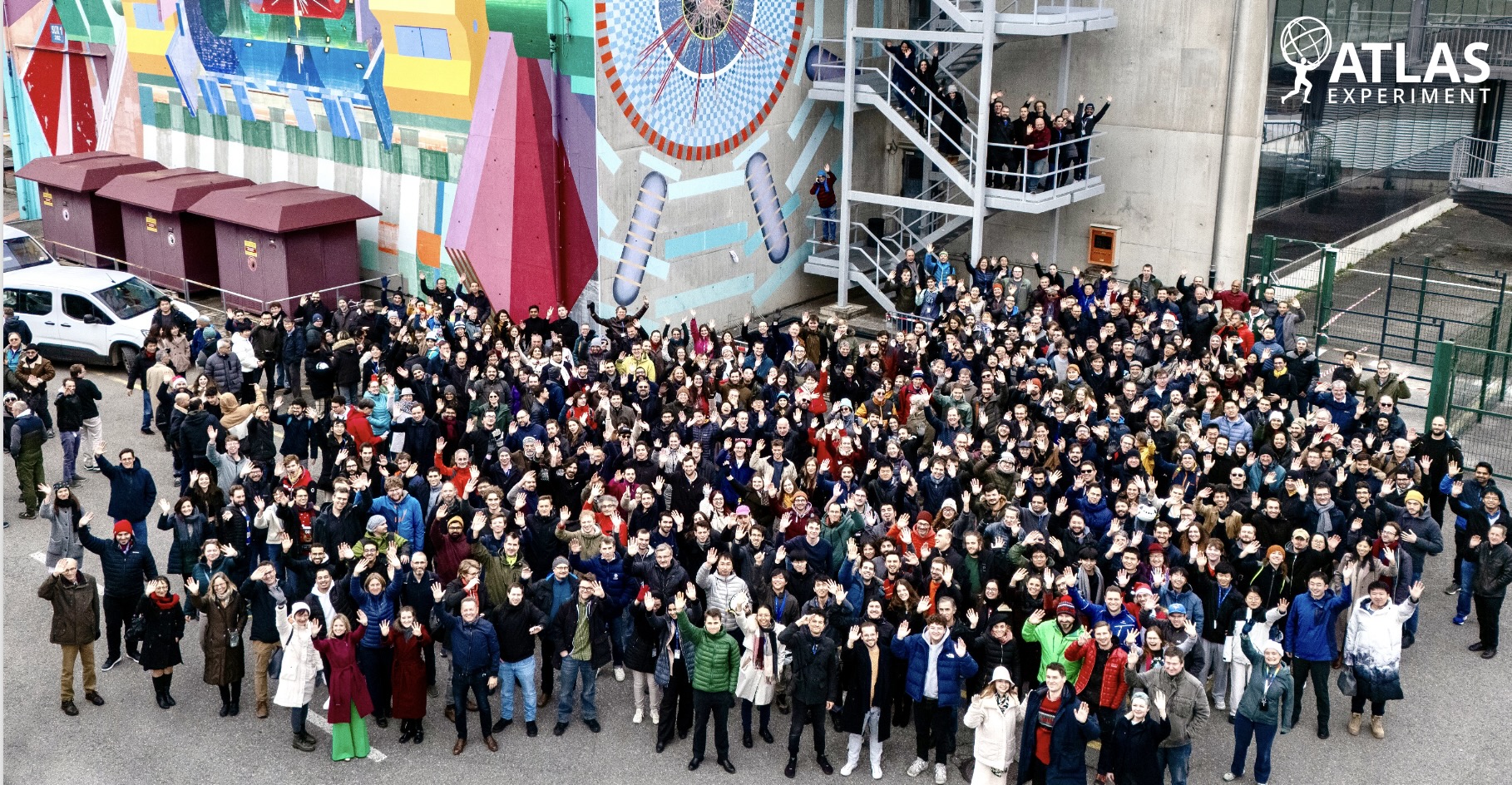
ATLAS Collaboration awarded Breakthrough Prize in Fundamental Physics
The ATLAS Collaboration at CERN has been awarded the Breakthrough Prize in Fundamental Physics for its pioneering studies of the high-energy collisions from the Large Hadron Collider (LHC).

A transformative leap in physics: ATLAS results from LHC Run 2
While the discovery of the Higgs boson in 2012 by the ATLAS and CMS Collaborations remains the LHC's crowning achievement, the ATLAS Collaboration has since produced a wealth of groundbreaking results that continue to reshape particle physics. In this feature article, Andreas Hoecker delves into the remarkable breakthroughs uncovered by ATLAS using Run 2 data.
Feature |

The LHC experiment collaborations at CERN receive Breakthrough Prize
This weekend, the ALICE, ATLAS, CMS and LHCb collaborations at the Large Hadron Collider at CERN were honoured with the Breakthrough Prize in Fundamental Physics by the Breakthrough Prize Foundation. The prize is awarded to the four collaborations, which unite thousands of researchers from more than 70 countries, and concerns the papers authored based on LHC Run-2 data up to July 2024. It was received by the spokespersons who led the collaborations during that time.
ATLAS prepares for High-Luminosity LHC
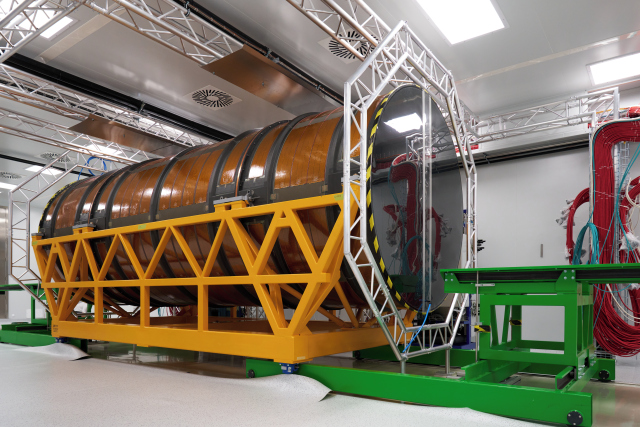
The ATLAS Collaboration submitted four documents to the European Strategy Group (ESG), namely, an overview of the extensive ATLAS detector upgrade for the HL-LHC, a summary of the software and computing preparations to address the HL-LHC challenges, a joint update with CMS on HL-LHC physics expectations, and a joint document on prospectives for flavour physics.
News |

New ATLAS Results at Moriond25
Every Spring, all eyes turn to La Thuile (Italy) for the arrival of the annual Recontres de Moriond conferences. Explore the full list of new ATLAS results presented at Moriond.
News |
Steering ATLAS forward with new management
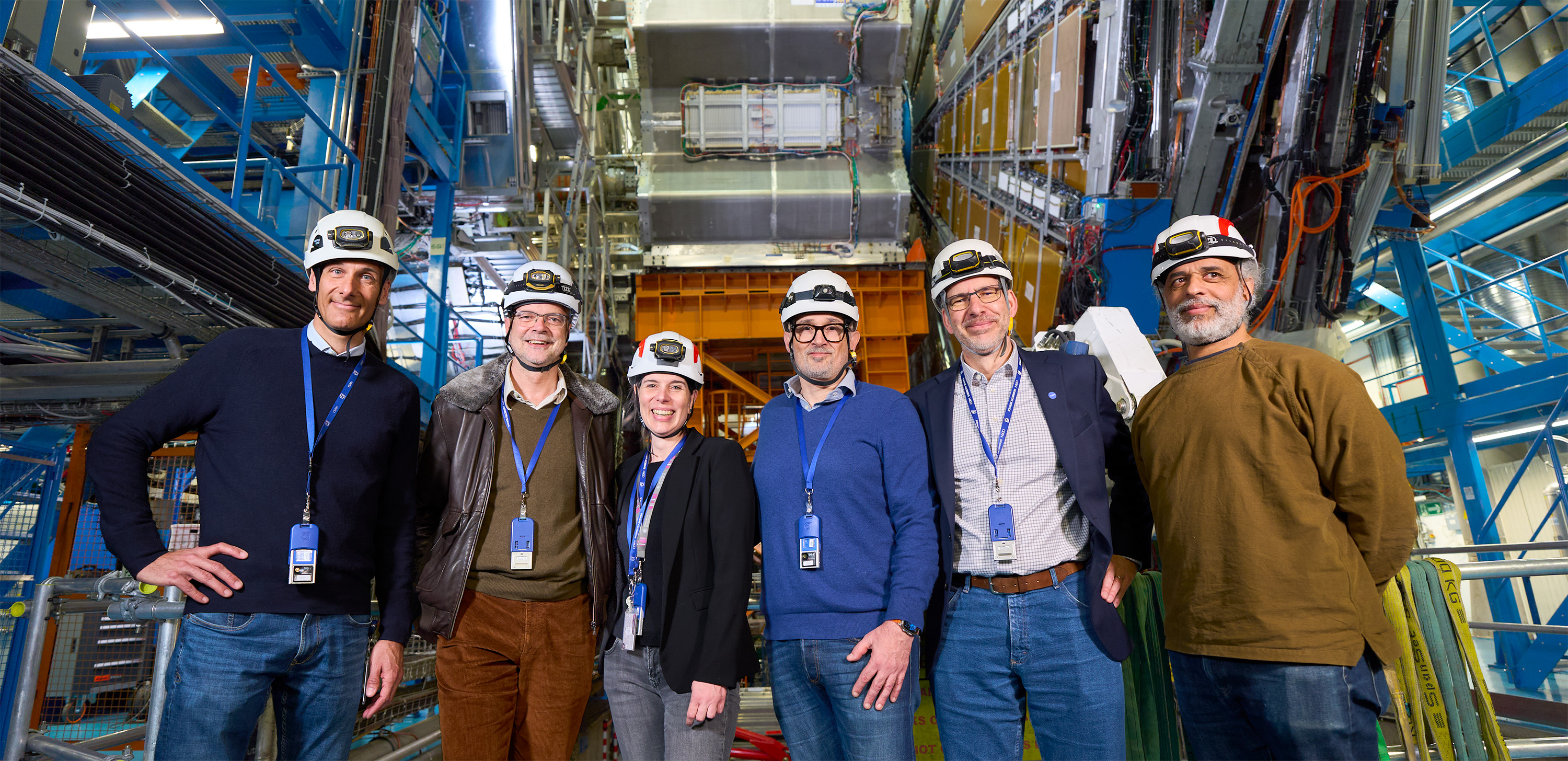
The ATLAS Collaboration embarks on a new chapter under the leadership of Spokesperson Stéphane Willocq (University of Massachusetts Amherst).
News |
ATLAS celebrates excellence in doctoral research
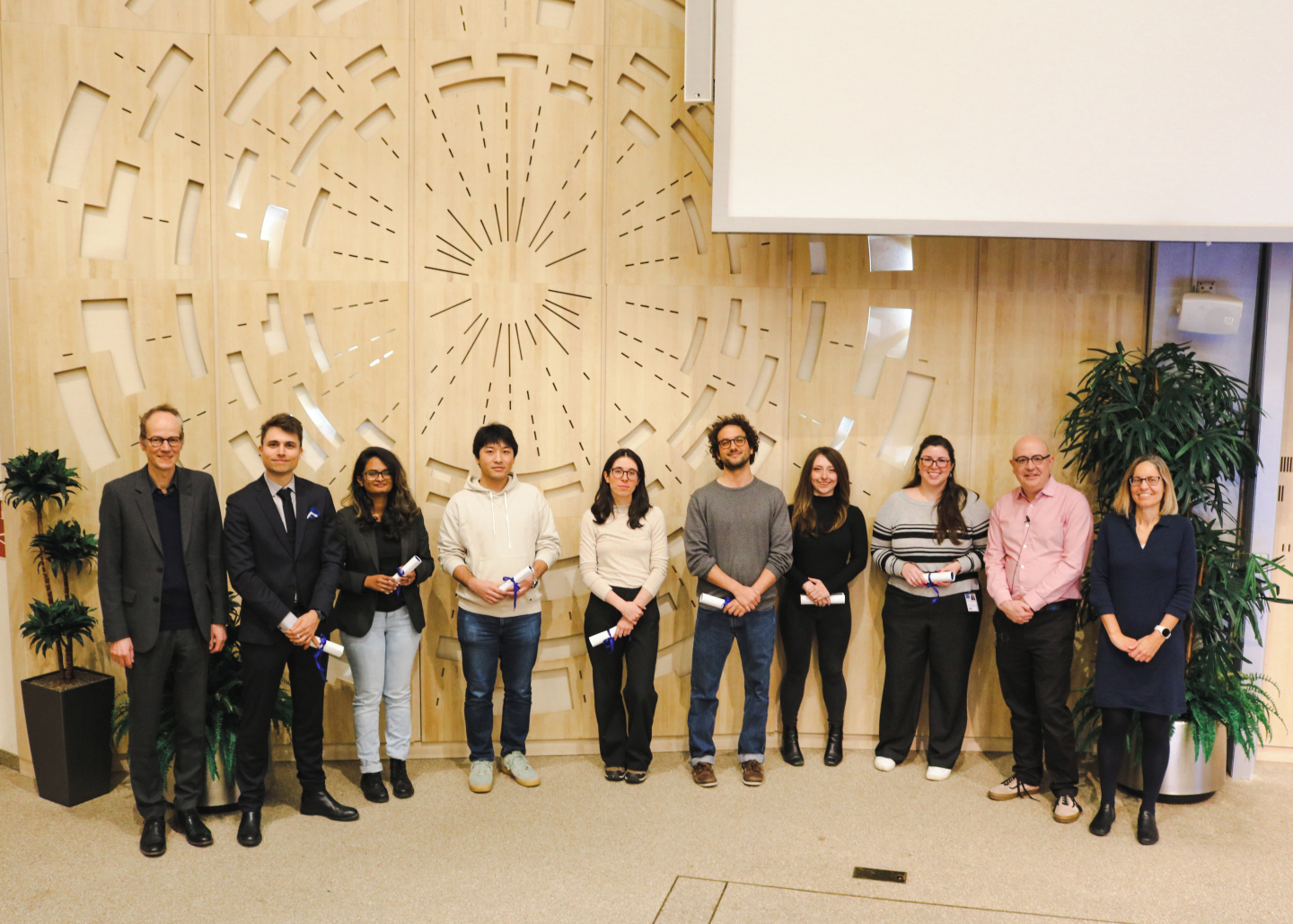
Among the more than 5500 members of the ATLAS Collaboration, PhD students play a vital role in advancing the experiment while pursuing their degrees. Every year, the ATLAS Thesis Awards celebrate their outstanding achievements, recognising the significant impact of their research on physics analyses, detector advancements, and software development.
News |