ATLAS maps the rare four-way intersections of the weak force
24 April 2026 | By
Despite its resounding success at describing high-energy phenomena, the Standard Model of particle physics provides no explanation for some of the fundamental questions of the Universe, such as the nature of dark matter or the origin of the matter–antimatter asymmetry. With no new fundamental particles beyond the Higgs boson yet observed at the LHC, physicists are searching for subtle deviations in the behaviour of known particles caused by potential new particles or forces.

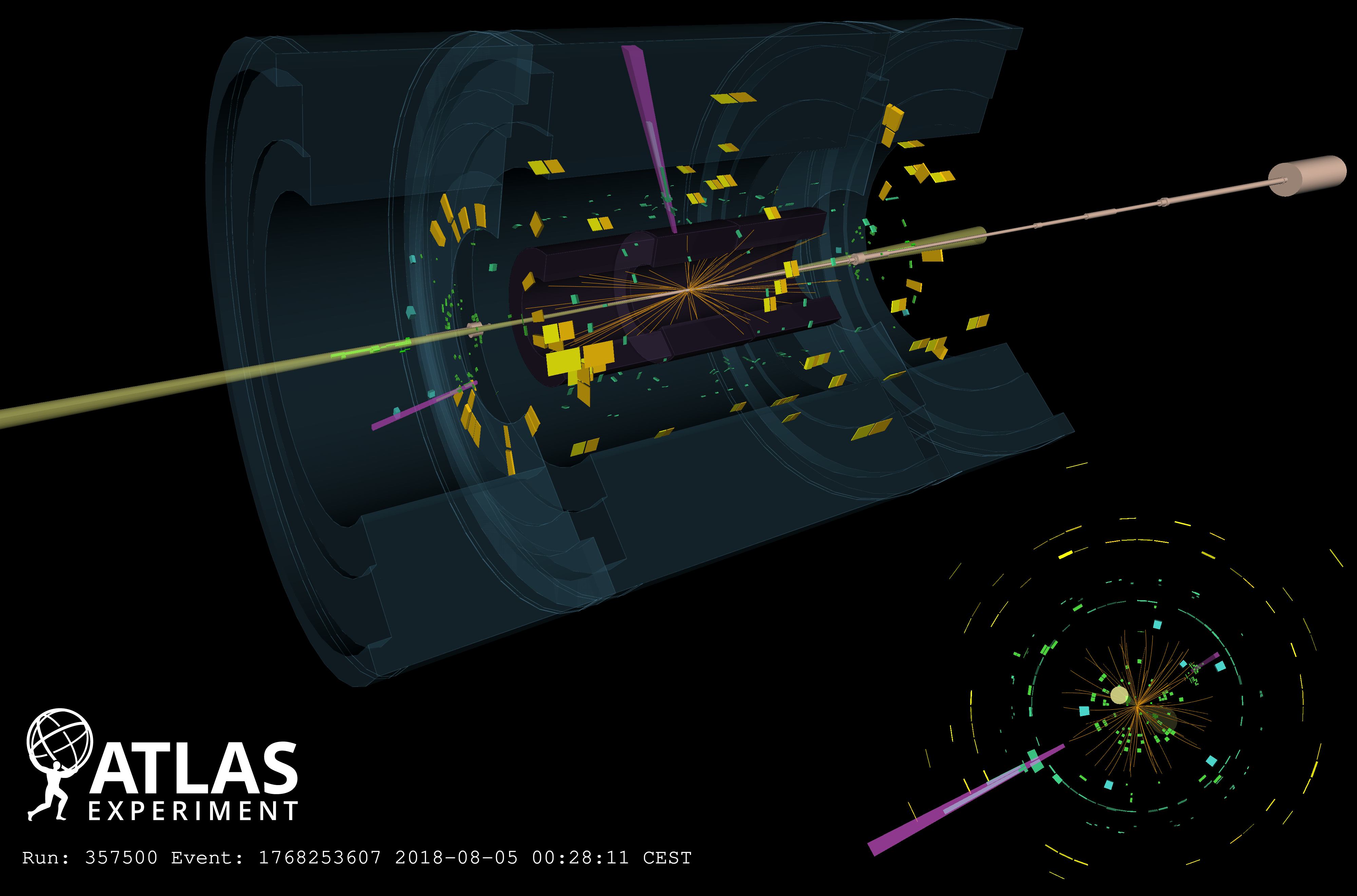
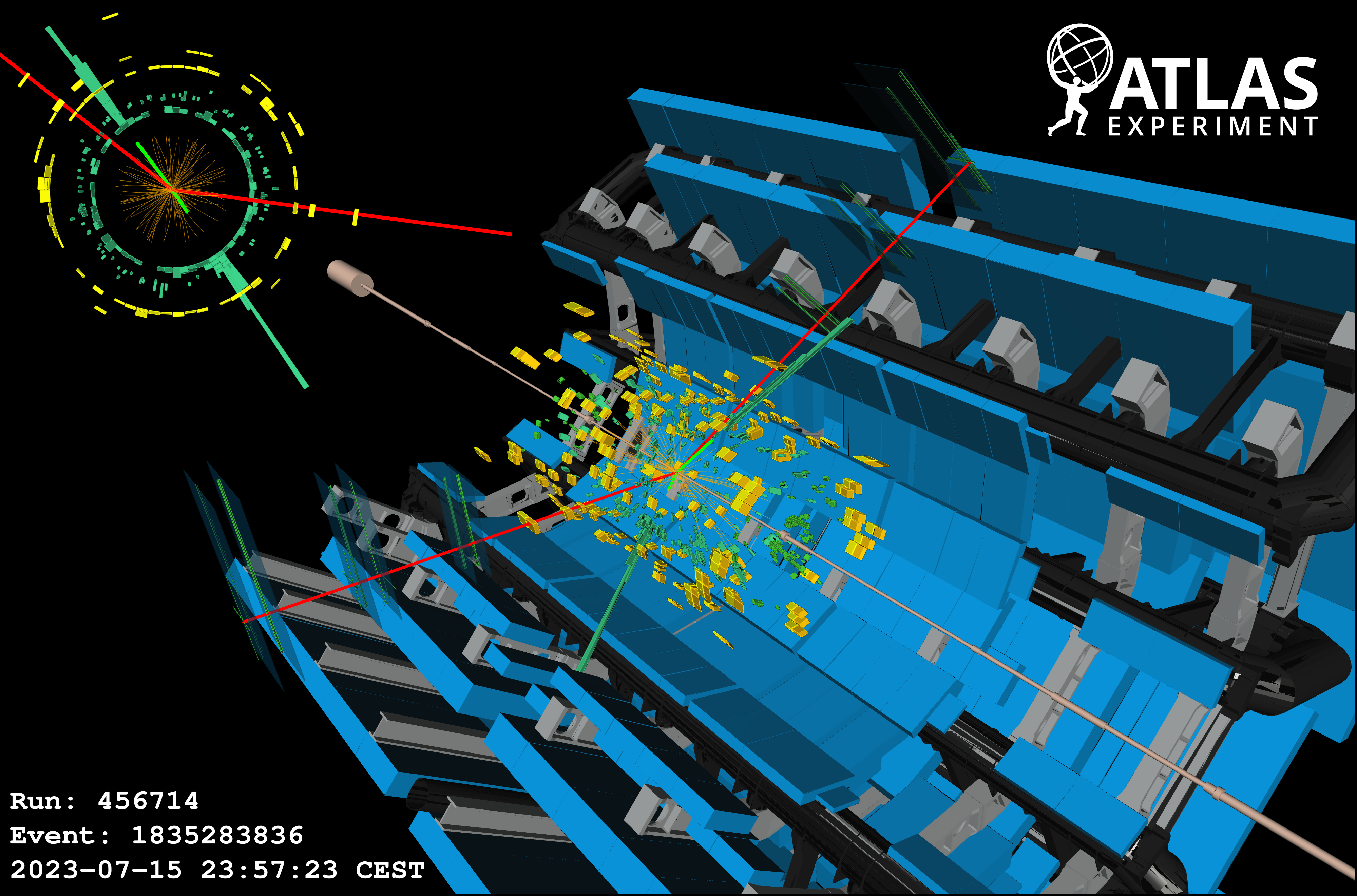
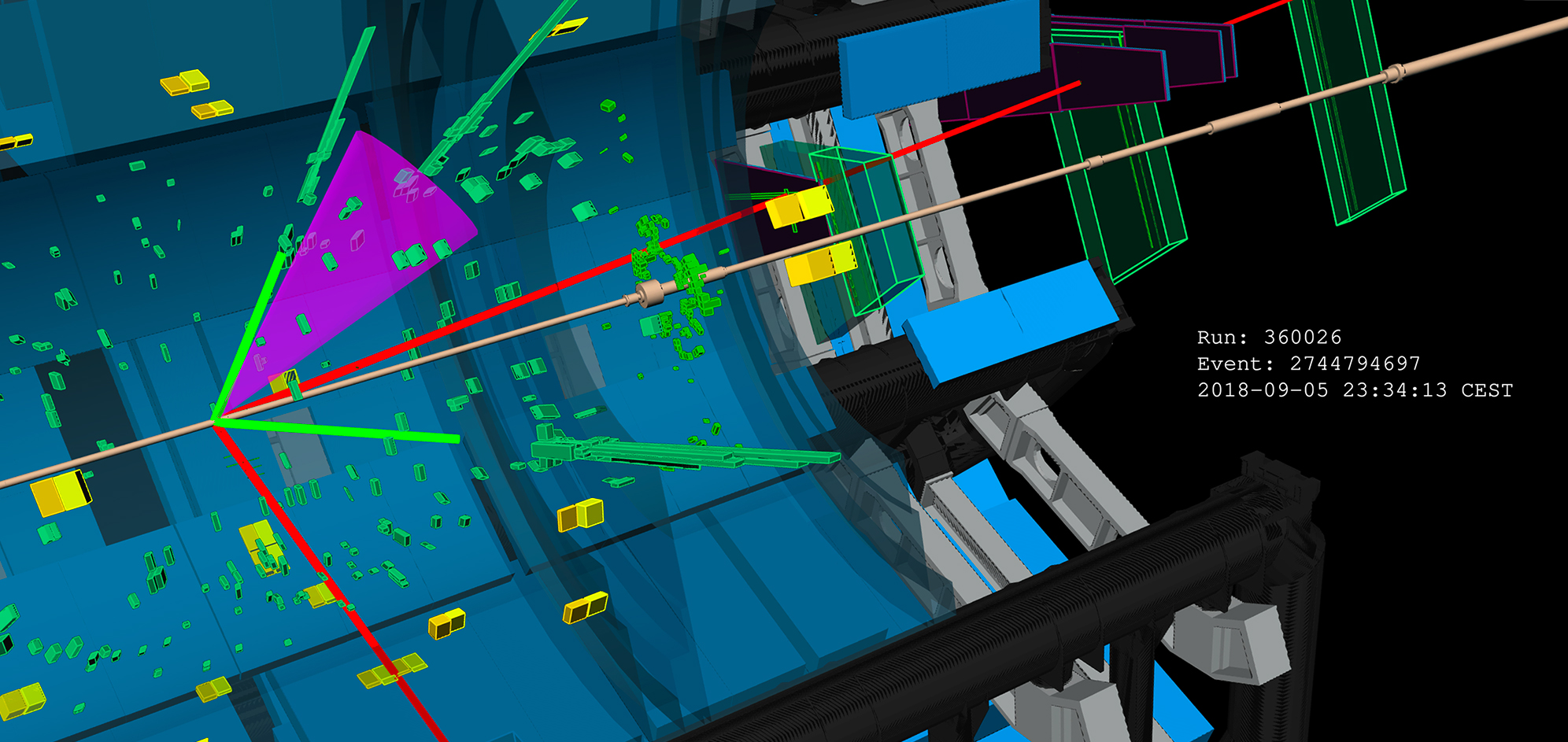
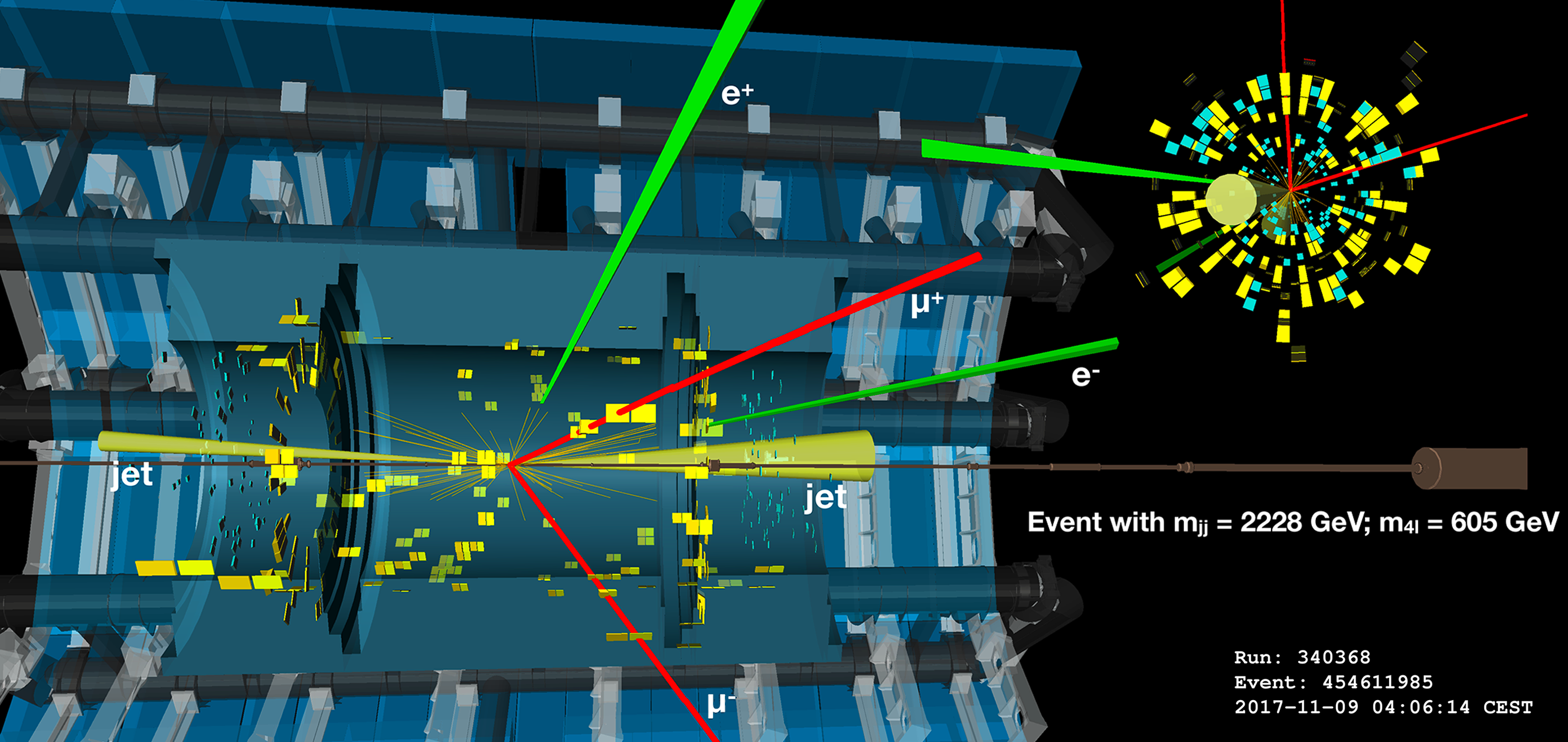
The self-interactions of W and Z bosons – the carriers of the weak force – are tightly constrained in the Standard Model, making them uniquely sensitive to deviations from Standard Model predictions at high energies. By studying rare LHC processes such as vector boson scattering (VBS) – where two vector bosons (photons, W or Z bosons) scatter off one another – and tri-boson production – the simultaneous production of three vector bosons – physicists are able to directly examine these interactions. In particular, they can measure quartic gauge couplings, where four bosons interact simultaneously (see Figure 1).
The ATLAS Collaboration has released a new search for anomalous quartic gauge couplings (aQGCs) that combines eight separate analyses of VBS and tri-boson production in the full LHC Run-2 dataset (2015–2018). The search relies on the Éboli model, a framework that classifies all possible aQGCs in terms of 17 parameters. Think of these parameters as different "dials" that could be turned up if new phenomena are present. Researchers were able to harmonise the Éboli model treatment across all eight analyses, leading to consistent and comprehensive coverage of its parameters.
ATLAS reports the first combination of VBS and triboson analyses providing the world's best constraints on anomalous electroweak boson quartic self-couplings.
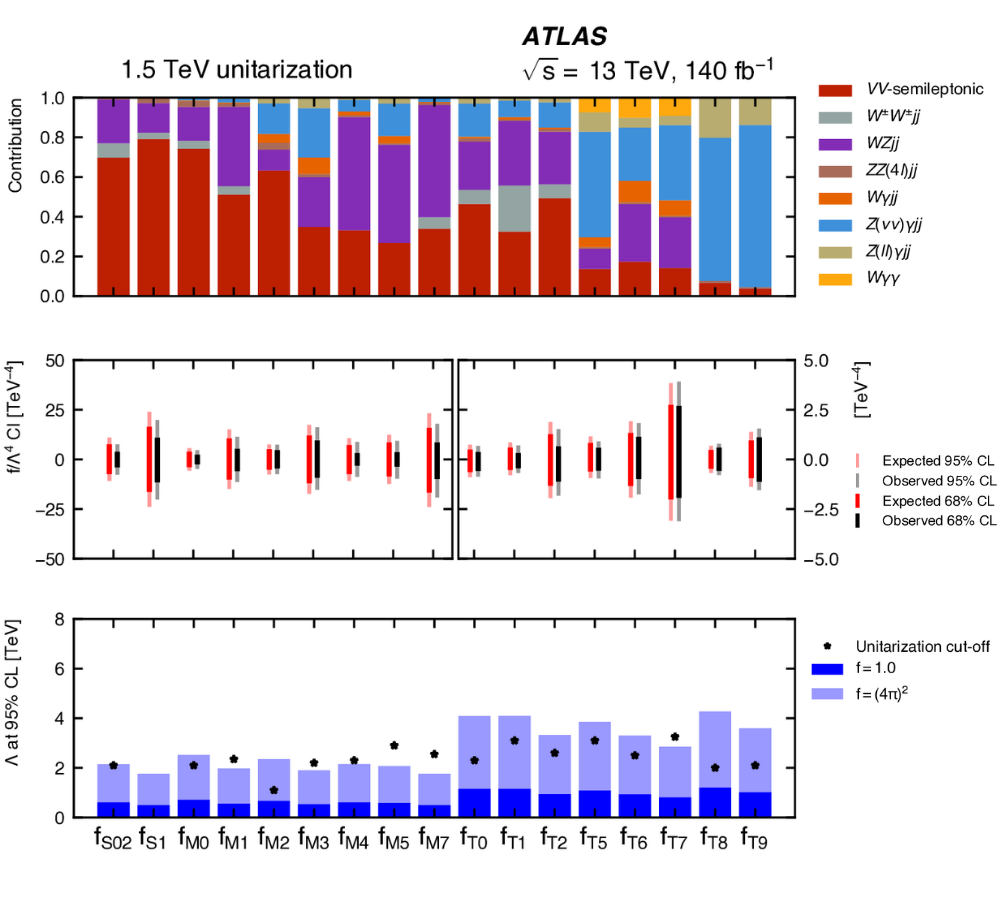
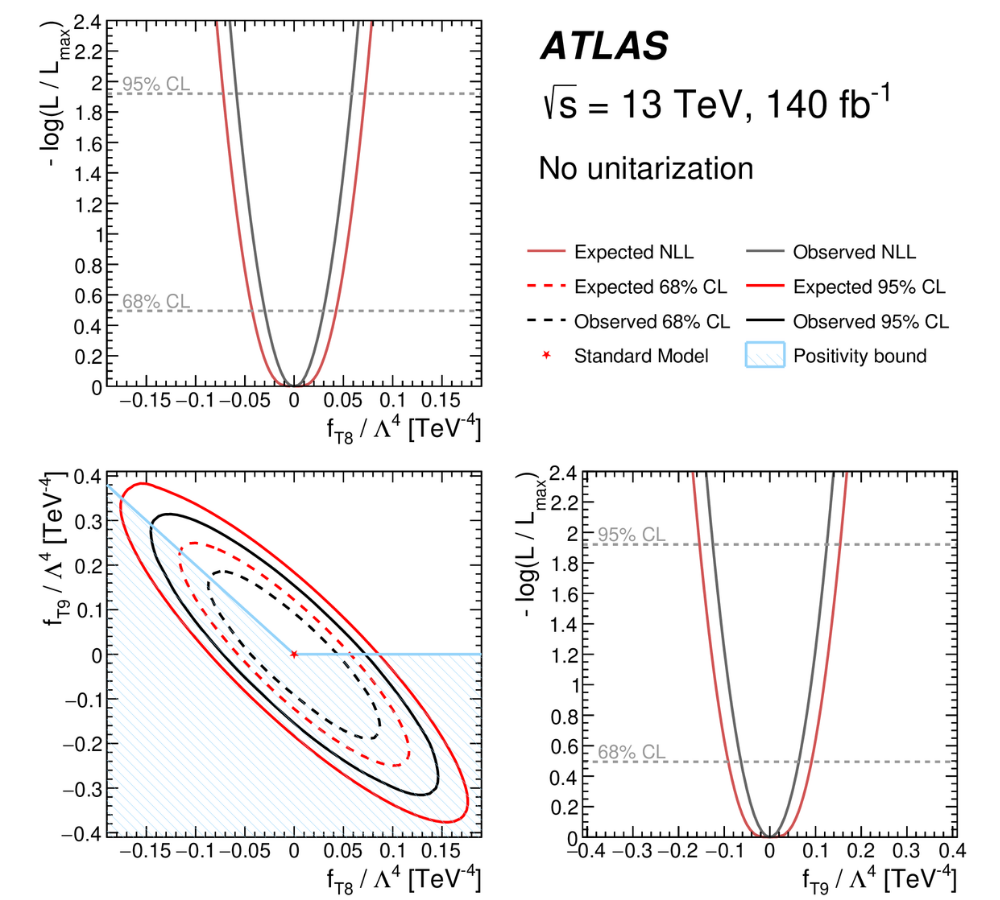
The combination is presented as confidence intervals on the 17 Éboli model parameters, obtained by varying one or two coefficients at a time while fixing the others to zero (see Figure 2). The combined limits are up to 96% tighter than the best previously published individual constraints, establishing them as the best constraints to date. Additional theoretical constraints, which ensure all parameter values are physically possible (e.g. ensuring no negative values), were compared to these experimental limits (see Figure 3).
This analysis represents the most complete and rigorous experimental study of aQGCs performed to date. It establishes a new benchmark for studies of vector boson self-interactions and will serve as a foundation for future global combinations. Looking ahead, ATLAS researchers will extend the search in analyses of the larger Run-3 dataset and prepare for the High-Luminosity LHC, further increasing sensitivity to possible signs of new physics beyond the Standard Model.
Learn more
- Combined effective field theory interpretation of measurements sensitive to quartic gauge boson couplings in proton-proton collisions at 13 TeV with the ATLAS detector (arXiv:2603.18630, see figures)
- Mapping the genuine bosonic quartic coupling (O. J. P. Eboli, M. C. Gonzalez-Garcia, arXiv:1604.03555)
- Shining light on the Weak force: ATLAS observes WWγ production, Physics Briefing, October 2025
- ATLAS probes the Higgs mechanism in the scattering of W boson, Physics Briefing, April 2025
- Unraveling Nature's secrets: vector boson scattering at the LHC, ATLAS Feature, September 2020